I am happy to announce that Wood Science has officially moved to LumberTalk.com.
After more than two years, it has become more than I expected and needs more than blogger to continue with my plans for it. LumberTalk will have even more useful content with more how-to's, technical information, and even regular profiles and interviews with small companies in the lumber industry.
The content (started in 2005) on Wood Science will remain as it is and all new content will be added to Lumber Talk from now on.
Thank you,
Chris
www.LumberTalk.com
Tuesday, November 20, 2007
Wood Science is Now LumberTalk . com

Wednesday, November 14, 2007
Beautiful Structural Timber Trusses
I ran across these structural timber trusses today when I was looking at small home plans from Ross Chapin Architects and it reminded me of the Parts of a Structural Timber Truss sketchcast I made a while back.
These structural timber trusses at the Whidbey Institute are absolutely beautiful. I am not sure who made them but I will probably try to find out later.


Small Home Plans
Small home plans typically include plans for small homes under 1,800 square feet but this article is really about small home plans for small homes under 1,000 square feet.
Often small homes under a thousand square feet are used as cabins or weekend homes but there is a growing movement towards living in very small homes to take advantage of energy savings, minimal investment in land and home, and because some people just enjoy the outdoors more and consider a home to be a place for sleeping. That's where my interest in small home plans really comes from.
Not exactly regular small home plans but if you are looking for a DIY small home, this is a fantastic step by step construction of the small home pictured above (really a small cabin).
Some Considerations for Choosing Small Home Plans
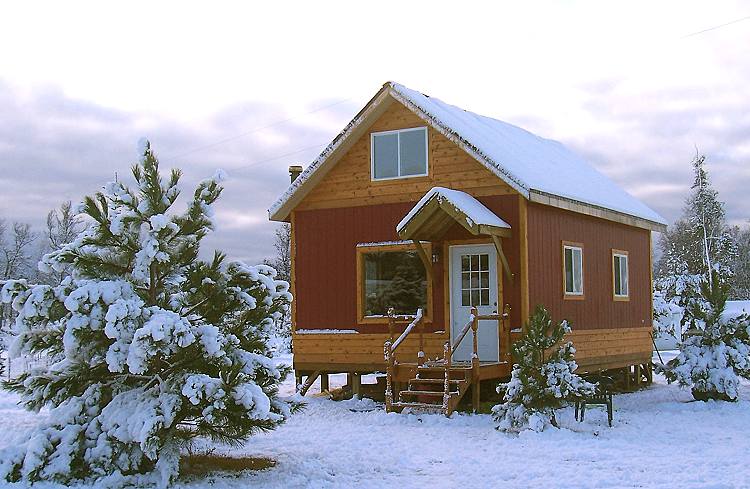
How much small do you really need? Be honest with yourself and your lifestyle and don't try to choose a small home plan that will require you to live in a new way.
Where are you building your home? Make sure the small home plan you choose makes sense for where you are building as well as why you want to build. If you are trying to save energy, a small home plan for a house made mostly of glass that you are going to build in the middle of the desert might not be the best idea. That's extreme but you get the idea. At least, I hope so.
What do your small home plans include? Before purchasing your small home plans be clear about what is included with your purchase. Do you get hard copies of the drawings, blueprints, a cd with plans, and a materials lists? Do you get just one of those or all of them? Can you make copies or do you have to buy additional copies? Do the small home plans meet the building codes for your building location?

This is not an endorsement (though I will take kickbacks if they want to give them) but my favorite small home plans are designed by Ross Chapin Architects.
Tuesday, October 02, 2007
How to Build a Dock Foundation
This sketchcast is an overview of the basic components required to build a dock or pier foundation and how they fit together.
The main components are:
- Pilings
- Pile Caps/Beams
- Stringers
Make sure you use properly treated wood when building your dock or pier. For fresh water, use wood treated to at least .60 pcf and use 2.5 pcf for saltwater. Marine environments are really tough on wood.
Along the same vein, use the best hardware you can get. The price difference will be next-to-nothing and you will always know that your dock or pier is really strong. Use hot dipped galvanized or even stainless steel hardware.
If you have any questions about the components, where to get them, or how to build a dock or pier foundation, post a comment here.
Tuesday, September 18, 2007
Plywood Grades & Information
I get questions about plywood grades from time to time so I figured I would see what it is already out there about plywood and compile it for you here. There is some good stuff.
Plywood Grades Sources:
- Plywood - this is like a plywood 101 and 201 combined. It covers hardwood plywood, how plywood is made, uses for plywood, and plywood grades.
- Plywood Grades Stamps - Even though this is a lesson specific to TECO, it still applies to the plywood grades stamps on most plywood.
- Softwood Plywood Grades - Informative article that sticks closely to construction plywood grades. Excellent read if you are about to building something with plywood.
- Hardwood Plywood Grading Rules - Sticks to hardwood plywood grading and gives a very clear explanation.


Plywood Grades (from "Plywood")
CDX: Lowest grade of exterior plywood available usually used for sheathing on roofs or walls. Can be used for utility purpose. Available in 3/8", ½", 5/8" and ¾"thicknesses in 4x8 pieces.
5/8" Underlayment: 4x8 used for subflooring, when a smooth surface is needed. This plywood is made with exterior glue.
BC Plywoods: BC grade plywoods have one finished face usually yellow pine made with exterior glue and is available in 3/8", ½", and ¾" in 4x8 pieces.
Finished and Special Purpose Panels Plywood Grades
AC Plywoods: AC grade plywoods have one finished face usually Douglas Fir made with exterior glue and is available in ¼", 3/8", ½, 5/8" and ¾" pieces.
Luan Plywood: A cheap grade of Mahogany plywood available in 1/8" and ¼" 4x8 pieces. Perfect for Cabinet backing, or any utility purpose.
BB Plyform: ¾" 4x8 sheets finished 2 faces, oiled for easy removal after being used for concrete forming.
Hardboard: Standard pressed hardboard 4x8 sheets available in 1/8" and ¼" thicknesses. Pegboard available in the same sizes.
Homasote: ½"x 4 x 8 sound board. Used on floors or wall for sound barrier, also great as bulletin boards.
A/B Marine: Marine plywood available in ¼", 3/8", ½" and ¾" thicknesses 4x8 sheets (sold by the sheet only). Marine plywood is usually used in boat making application. The same exterior glue as in all exterior construction grade plywoods is used. The main difference, and what makes marine plywood more expensive is the voidless inner plys that make up the plywood. Inner plys must be solid. (A boats motor causes vibration, if a plywood with inner voids is used the plywood can delaminate. Marine plywood has all voidless inner plys.)
MDO: Medium Density Overlay is regular plywood core with a smooth 10 mill paper applied to one or both faces. The smooth paper facing is an excellent surface for painting signs. If sealed and primed properly MDO can be used outside. Thicknesses available in 3/8", ½", ¾" GIS an G2S. 4x8 sheets.
MDF: Medium Density Fiberboard, a heavy fibered board used in cabinet making. Excellent for paint applications. What Cabinet makers like about the product is it’s routeable surface. MDF is also used in making speaker cabinets. Sizes available are ½" and ¾" sheets.
CCA Treated Plywood: A grade of "green" CCA treated plywood is chemically treated to prevent corrosion. Re-Dried after treatment, this plywood is excellent for exterior application.
Hardwood Plywoods: Species types are: Birch, Red Oak, Cherry, Mahogany, Walnut and Maple. Sizes are available in ¼", 3/8", ½", ¾" in most species types. Most Hardwood plywoods stocked are graded A-1 which means good on one face. Other grade designations are Cabinet Grade and paint grade for more common used birch panels.Thursday, September 13, 2007
Treated Wood Vine Posts
Treated wood vine post alternatives. This is a short post from Decanter about how vineyards are moving from the use of treated wood vine posts to metal posts because of the perceived dangers of CCA.
Alternatives to CCA treated wood vine posts include:
- ACQ (Alkaline Copper Quaternary) treated posts
- MCQ (Micronized Copper Quaternary) treated posts
Metal vine posts might be the option for the future but they have the same UNappeal as synthetic corks - they work just as well but don't look as cool.
Friday, September 07, 2007
Timber Frame Construction
I found some free ebooks today from the American Wood Council that will help you with any timber frame construction project you are working on. They include information about topics ranging from spans to timber frame connections to proper materials choices. They are totally free, compliments of the AWC. Enjoy your timber frame construction project.
- Plank-and-Beam Framing for Residential Buildings ebook
- Heavy Timber Construction ebook
- Design of Wood Frame Structures for Permanence ebook
You can buy treated or untreated timbers from American Pole and Timber.
Saturday, August 25, 2007
How to Build a Wood Bulkhead
This is a sketchcast of how to build a wood bulkhead. It covers the basic design and components of a wood bulkhead. This is a follow up of how to build a vinyl bulkhead a few weeks ago.
Here are the basic wood bulkhead components covered in the sketchast:
- Pilings
- Wales
- Center Match
- Filter Cloth
- Tie Rods
- Dead Men
- Hardware
If you have any questions, please leave a comment.
Wednesday, August 08, 2007
Parts of a Structural Timber Truss
This is another sketchcast about the basic parts of a structural timber truss. This should give you some basic knowledge about structural timber truss terms and components so you will have some idea of what you are talking about when you discuss your project with your supplier, architect, or engineer (or all of them).
There are many kinds of timber trusses (not all are structural) and most consist of the same basic components, as covered in the Parts of a Timber Truss Sketchcast. Enjoy.
I liked this first-hand article from Deer Tracks & Trails about Timber Roof Trusses. He also suggests that trusses should be engineered - sound advice.
Here is a good page with truss types with pictures. There are WAAAY better ones out there but I cannot find the one I really want right now.
If you are looking for someone to build your structural timber trusses, American Pole and Timber manufactures excellent custom structural timber trusses. Ask for Eric Lincoln. Eric will help you with the design, if needed, and will make sure you end up with a beautiful structural timber trusses you will be proud to display and show off.
If you are looking for simple roof trusses - trusses that are used to build a regular house (trusses are NOT exposed) this Manufactured Roof Truss page.
Tuesday, July 31, 2007
How to Build a Vinyl Bulkhead
This is a sketchcast of how to build a vinyl bulkhead. From a side view, it covers the basic required components, a few key terms, and very general installation guidelines of a building a vinyl bulkhead.
It does not endorse any specific vinyl sheet piling brand because installation of most of them is the same with a few exceptions.
Vinyl Bulkhead Materials & Terms
Vinyl Sheet Piling - the piling itself, usually made of PVC with UV inhibitors.
Wale - treated lumber or timber used to support the front of the bulkhead.
Backboard - treated lumber or timber used to support the backside of the bulkhead.
Tie Rod - galvanized or stainless rod with threads on each end used to connect the bulkhead to the deadmen.
Deadmen - treated posts or short poles buried behind the wall and connected to the bulkhead to support the vinyl bulkhead and prevent it from collapsing into the water under extreme pressure from behind.
Top Cap - treated lumber or timber used to cover the top of the bulkhead. Usually connected to the backboard and front wale using screws or nails.
Mud Line - bottom of the water.
50/50 Rule - commonly used rule for vinyl bulkhead design stating that the sheet piling should be driven as far into the ground (below the mud line) as it is exposed. 50% of the sheet should be below the mud line and 50% of the sheet should be above the mud line.
Tuesday, July 17, 2007
Plastic Lumber & Wood
Synthetic lumber is rapidly becoming a more commonly used material in construction. In the past, it was used mostly for outdoor furniture or fixtures but with improvements in strengths and weathering properties, plastic lumber is being used more in capital construction.
In another post I covered some of the many composite deck options but this post is about the broader use of plastic lumber and some of current options.
Polywood, Inc, based in New Jersey, "manufactures structural plastic lumber from post-consumer and post-industrial recycled plastics. Using our patented technologies, we’re developing and advancing the use of structural, industrial plastic lumber." They claim their polywood is "tougher and more resilient" than treated wood. I would like to know more about what they mean by "tougher" but you have to contact them for their technical data. I am always skeptical of imitation products.
Bedford Technology makes Fiber Force plastic lumber for building playground equipment, pedestrian bridges, and other small outdoor structures. "[Fiber Force is] made of recycled high density polyethylene plastic, colorants, ultraviolet stabilizers, and combined with fiberglass." It also comes in a variety of colors, including blue, red, and yellow. Amazingly, they offer sizes up to 12x12-20'!
American Composite Timbers (ACT) makes structural lumber and timbers (also up to 12x12) "composed of recycled plastic, fiberglass and select additives which offer a choice of colors, UV stabilization, and if special ordered, flame retardancy." To me, the flame option of adding a flame retardant is the interesting thing because there are not many outdoor products (especially in wood options) that are flame retardant.
TimberGuard is an interesting and durable option I have actually seen before. It is NOT plastic lumber but is polymer wrapped lumber so it has the proven strength of wood. It is made with a process that kind of pushes the lumber through a sheet of thick polymer materials that dries into a very hard shell around the wood. It is very tough stuff.
21 POLY is similar to TimberGuard but is a polymer coating that is sprayed onto wood (usually about 1/16" thick) and binds to the wood fibers. It is an excellent product and is very easy to work with. You can drill, cut, and nail it and it comes in tan, green, dark brown, and battleship gray.
I will try to keep up with plastic lumber and poly lumber options out there but this list is a good start for durable outdoor materials.
Friday, July 13, 2007
Pine Beetle Problems in BC
This is an excellent article in Inside British Columbia, written by Dave Neads, discussing the region's massive-scale pine beetle problem and its effects on timber supply, the economy, and even the society as it moves into the future.
To give you an idea of the scale of the forestry problem consider the Chilcotin, an area the size of Switzerland, predominantly forested with lodgepole pine. By 2010 it is estimated that the MPB will have killed roughly half a billion trees in the Chilcotin. Half a billion. That would represent 25 years of logging at current rates. All gone in the next few years.Here is some Wood Science information about Southern Pine Beetles.
Monday, July 09, 2007
Loading Logs on a LoggingTruck
This is a great video of a logging truck being loaded by a loader. The loader is pretty talented. It is about the same all the way through so once you have seen the first 3o seconds or so you can probably move on to the next video.
Monday, July 02, 2007
Pressure Treated Wood and Gardening
I just ran across this article about using pressure treated wood in raised gardens on Compost Bin, a blog mostly about gardening.
It is a good article and includes information from John Bumby of The Maine Wood Treaters about various treated wood options and why ACQ is corrosive to hardware.
Here's another post from Projo Garden Blog on the topic of treated wood in your garden: "Pressure treated wood and gardening: newer solutions."
I built a raised garden this year and feel like the plastic liner I used made the treatment used to preserve the wood (ACQ in my case) virtually irrelevant.
Tuesday, June 12, 2007
Wood Column Suppliers and Manufacturers

I have put together a list of wooden column suppliers here who have good selections, listed prices, or both. Of course you can call any of them for prices and some offer free online quotes when you submit their contact forms.
HB&G Columns - My favorite wood columns site. They have, and display, round and square wood columns and openly list their pricing. The site is nice, clean, and easy to use. The site includes the full range of information you might need about their columns whether you are an architect, builder, or DIYer. HB&G even has an installation video and a pdf.
Melton Classics - Good selection of wood columns and the site shows technical specifications of the column options. No prices posted. 10 year warranty on columns.
Chadsworth's 1.800 Columns - simple to use website and a good selection. They do not post prices due to fluctuating raw materials costs as they say on their "special announcement" dated September 21, 2005 (this posted 6-12-07).
Timeless Architectural Reproductions - Paint grade and stain grade wood columns. No prices listed on their website.
Colonial Columns - I am not a fan of the design of this site but that is not the point of this. Colonial Columns has a good list of wood columns and caps and bases and an installation guide for caps and bases.
Pagliacco Turning & Milling - Their website makes choosing the style you want simple.
Worthington Millwork - Nice site with a great column installation guide. If you need to know how to install a column, look here. They also have a great list of allowable capacities for their columns as well as specs and cad drawings (free cd).
AIC Millworks - Interior columns. They show pricing (and they are not bad) but have a somewhat limited variety.
Imperial Columns - If your eyes can handle the website you can see their prices. My vision was collapsing so I don't know if the prices were good or not.
Columns.net - They have a good selection of wood columns and great tool for choosing your cap, column, and base that shows what your column will look like.
Elite Crown Moldings - A Canadian company with a limited selection of wood columns but they do have a price list and you can order online.
Thursday, June 07, 2007
Redwood Suppliers and Information
I get a lot of questions about redwood and where to buy it. Here is a list of companies that supply redwood lumber. Redwood is an excellent wood for decks, fences, gazebos, and patio because it is strong and naturally resistant to damage from termites and rot. Typically, there are two categories of redwood grades:
- Garden or Construction Grades - ranges from rough with large knots to pretty clean (sometimes called "construction heart" or "con heart redwood")
- Architectural Grades - tight or no knots (sometimes called "clear heart redwood")

To learn more about redwood grades and uses, start at the California Redwood Association. They have a fairly comprehensive redwood FAQ and an excellent page about available redwood grades.
Redwood Suppliers
- OregonWildWood sells very high quality (furniture quality) redwood.
- Himes&Starr in Carrollton, TX supplies redwood deck materials and some redwood timbers.
- Redwood Lumber & Supply Company in California specializes in redwood.
- Capital Lumber supplies redwood from multiple locations across the west and southwest and also has a redwood MSDS.
- R.H. Wilson supplies redwood in the UK.
- McGee Lumber in North Carolina supplies redwood lumber.
Good luck. I hope you find the redwood you are looking for.
Chain Saw Safety Video - Directional Face Notch
Below are two videos about chain saw safety that are definitely worth watching.
The first video shows how to safely and correctly cut a Directional Face Notch.
The second video is produced by Lowes Home Improvement and is a very thorough safey guide for using a chainsaw - especially for a home user.
It covers topics such as:
- General chain saw safety features
- Protective clothing and equipment
- Safely starting a chainsaw
- Checking area where you are going to cut
- Limbing and bucking
- Binding and kickback
- Common sense
Earthquake Test on Two Story House
This video shows a controlled earthquake test on a two story wood house. Watch how much the house flexes with the ground movement, especially at the connection between the first and second floors.
It is easy to imagine the damage an earthquake can cause to the structural integrity of a house and this demonstrates that very well.
Monday, June 04, 2007
Setting a Utility Pole with Air
This is a video of a utility pole being set in the sandy ground using an air jet. According to the guy on the video they are using 13,000 cubic pounds of air per minute. I have never seen this method used on dry land. It is often used to "jet" pilings into the ground along sandy shorelines. This is great, especially considering the size of the pole.
Subscribe to:
Posts (Atom)